FLUTTER OR REACT NATIVE: WHICH IS BETTER FOR YOUR PROJECT?
Introduction
Looking to build a user-friendly cross-platform mobile app quickly and cut costs? Unsure which tech will work better and what framework is best for the project? This blog is here for you to help. We’ve stacked Flutter or React Native from an app developer’s point of view to show the best possible fit.
With over seven years in cross-platform development, we’ve created this article to share our best insights and help you make a well-informed choice about the best cross-platform app development solution for your sleek mobile app.
Therefore, in this post, we will cover the main question: Flutter or React Native: which one is better for building an MVP (Minimum Viable Product). And other questions to give you a better understanding of how your business can benefit from either of the two technologies.
Why is selecting a framework so important?
The framework you choose significantly influences all the key aspects of your future app, such as:
- performance,
- scalability,
- maintenance,
- cost,
- velocity.
Consequently, making the right choice can streamline every aspect, guarantee a seamless user experience, and diminish long-term expenses. On the flip side, a suboptimal decision can lead to a different narrative. Let’s explore the strategies for identifying the most suitable cross-platform app development solution for your unique project. And to begin with, let’s actually compare the characteristics of the two frameworks.
 Flutter overview
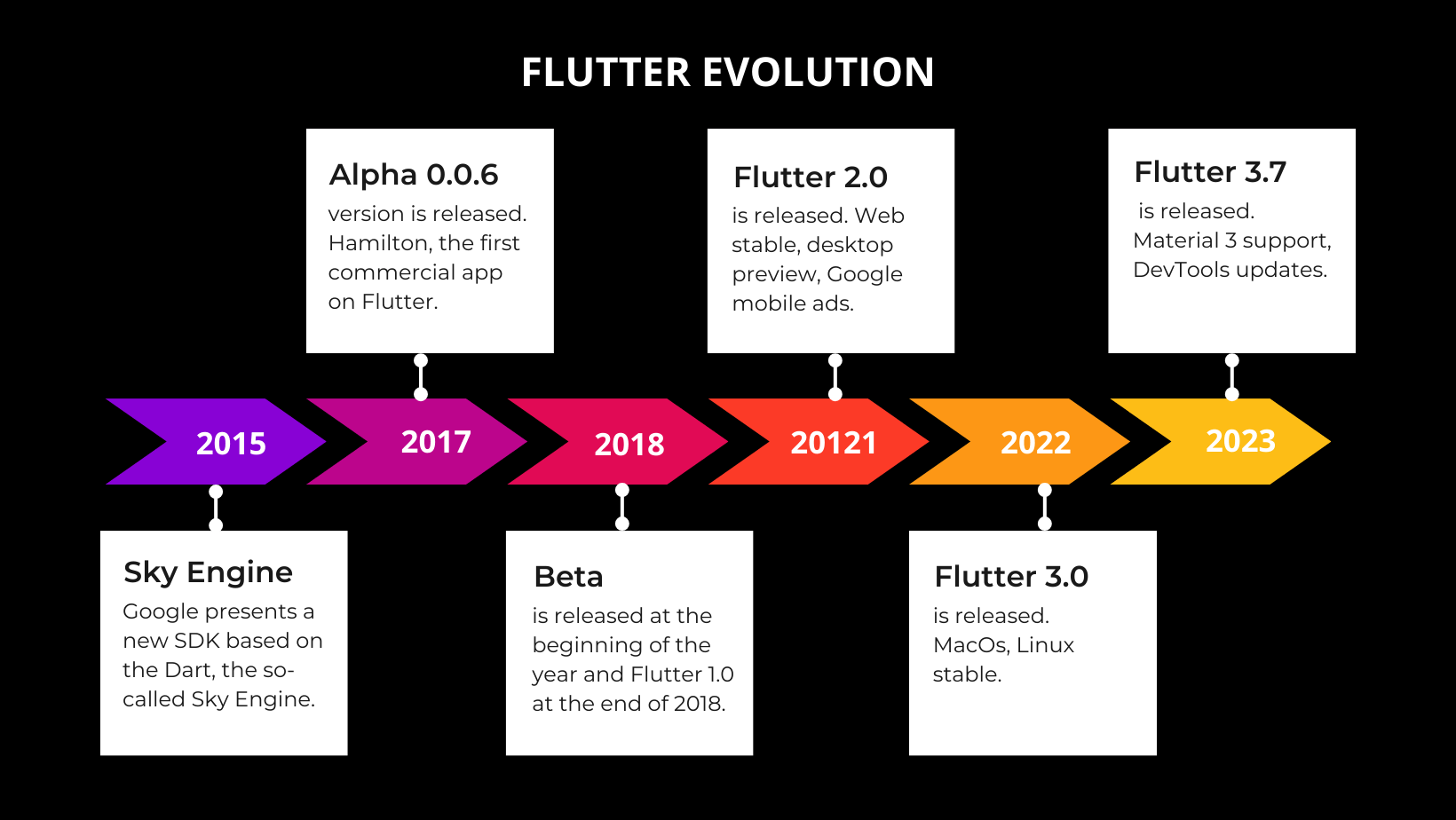
To begin with, Flutter is a cutting-edge open-source UI software development toolkit created by Google, and it continually gains popularity among developers. Here’s a an overview of Flutter, highlighting its main details and features:
Flutter in a Nutshell
In short, Flutter simplifies the development process, making it accessible for both novice and experienced developers.
Key Features
Hot Reload
Above all, Flutter’s Hot Reload feature allows developers to instantly view the impact of code changes without restarting the entire application.
Single Codebase, Multiple Platforms
Write code once, run it everywhere! Most importantly, Flutter allows you to create applications for iOS, Android, and even the web from a single codebase.
Beautifully Customizable Widgets
Flutter revolves around widgets – its building blocks for creating stunning user interfaces. Certainly, the framework comes with an extensive library of customizable widgets, enabling developers to craft visually appealing and consistent designs effortlessly.
Expressive and Intuitive UI
With Flutter, you can bring your creative visions to life. For example, the framework offers a rich set of pre-designed material and Cupertino widgets, allowing you to create expressive and intuitive user interfaces that engage and delight users.
High Performance
Flutter is designed for speed. It compiles to native ARM code and doesn’t rely on an intermediate bridge. To clarify, Flutter creates high-performance applications that run smoothly and respond quickly, providing a seamless user experience.
Growing Community and Documentation
Flutter has a vibrant and supportive community of developers worldwide. With extensive documentation, tutorials, and a plethora of resources, learning Flutter is not only easy but also enjoyable.
Basic facts about Flutter
- Above all the framework is free and open source.
- Flutter is based on Dart – a fast, object-oriented programming language relatively easy to learn.
- It offers documentss for developers moving over from other frameworks.
- Additionally, Dart supports sound null safety.
- Flutter provides attractive customizable widgets drawn from its own high-performance rendering engine.
- Due to the great widget experience, Flutter apps have an exceptional look and feel.
Top 5 famous apps on Flutter
- The New York Times (iOS, Android)
- Google Ads (iOS, Android)
- myBMW (iOS, Android)
- eBay Motors (iOS, Android)
- Groupon (iOS, Android)
To sum up and to learn more about Flutter in action read our blog post about Top 10 Popular Apps Built With Flutter.
 React Native overview
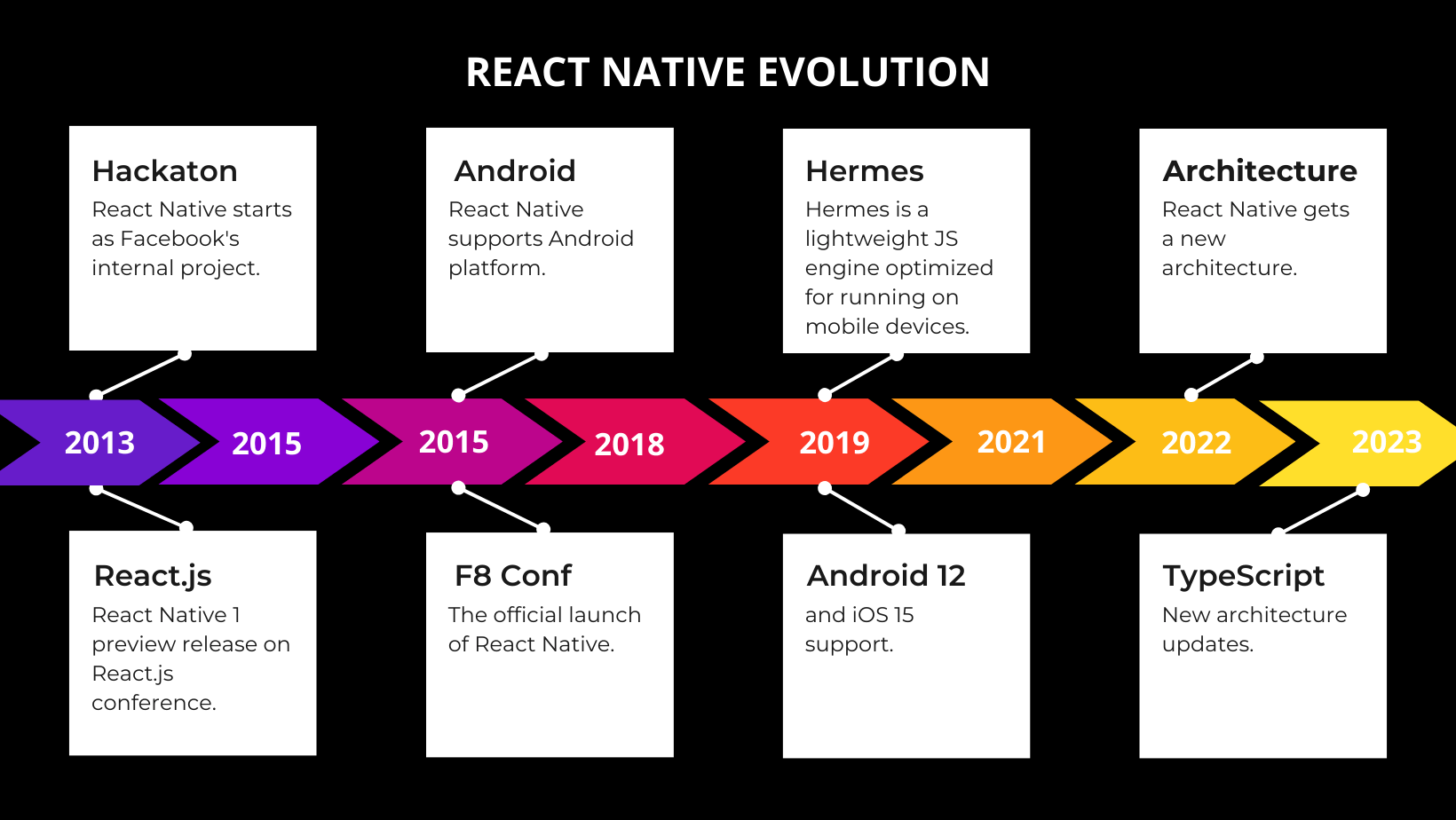
React Native in a Nutshell
Developed by Facebook, React Native is a powerful open-source framework that simplifies the creation of cross-platform mobile applications. It’s renowned for its ability to deliver a native-like experience while sharing a substantial codebase between iOS and Android platforms.
Key Features
Write Once, Use Anywhere
Firstly, developers can write code in JavaScript and React, and the framework allows them to deploy the same codebase across multiple platforms. This significantly streamlines the development process and reduces time and effort.
Native-Like Performance
Secondly, By utilizing native components, the framework ensures that applications not only look but also feel like traditional native apps. In other words it allows smooth animations, quick load times, and an overall seamless user experience.
Hot Reloading
Further, this feature enables developers to instantly see the effects of code changes without rebuilding the entire app. That is to say React Native enhances productivity by providing a rapid development cycle.
Large Community and Third-Party Libraries
Moreover, with a large number of developers contributing to its growth, React Native benefits from a wide array of third-party libraries, modules, and plugins.
Reusable Components
In addition, reusable components, allowing developers to create modular and shareable elements. This not only accelerates development but also ensures consistency across different parts of the application.
Easy Integration with Native Modules
Meanwhile, this flexibility enables developers to leverage the strengths of both React Native and native code when necessary.
Facebook and Instagram Endorsement
Subsequently, being backed by Facebook, React Native has the support of one of the largest tech companies globally. This endorsement ensures ongoing development, updates, and a commitment to the framework’s long-term viability.
Basic facts about React Native
- Most importantly React Native uses the same fundamental UI building blocks as regular iOS and Android apps. Instead of building in Java, Kotlin, or Swift, you’re putting the same building blocks together, using JavaScript and React.
- Certainly React Native uses components that are similar to widgets in Flutter.
- It’s best to use external libraries to develop web and desktop applications with React Native with a single codebase.
- After that, apps made with React Native can be updated without needing to go through the entire review process (e.g by using CodePush or Expo EAS Update).
- In conclusion, Expo is a framework based on React Native that speeds up the development process by rich SDK for standard features (like camera, linking, SMS, splash screen, or even integration with Flutter’s skin graphics library).
Top 5 famous apps on React Native
- Tesla (iOS, Android)
- Instagram (iOS, Android)
- Meta Ads Manager (iOS, Android)
- Pinterest (iOS, Android)
- Microsoft Office (iOS, Android)
 Choosing between React Native and Flutter
Choosing between React Native and Flutter for mobile app development is a common dilemma. Let’s break down the key aspects to make this decision easier for you.
Programming Language
React Native
React Native uses JavaScript, a language widely known and used for web development. This can be advantageous if your team is already familiar with JavaScript.
Flutter
But Flutter uses Dart, which might require some learning for your team if they are not already familiar with it.
Performance
React Native
Employs a bridge to communicate between JavaScript and native components, which can introduce a slight performance overhead.
Flutter
Compiles to native ARM code, offering potentially better performance compared to React Native.
UI Components
React Native
RN uses native components, which can be an advantage if you want your app to have a native look and feel.
Flutter
However, Flutter offers a rich set of customizable widgets, providing a consistent look across platforms.
Community and Ecosystem
React Native
Has been around longer and has a larger community, resulting in extensive third-party libraries and modules.
Flutter
Growing rapidly with strong community support, but might not have the same breadth of third-party packages as React Native.
Development Time and Hot Reload
React Native
Known for its excellent hot reload feature, for instance it allows developers to instantly see the impact of changes.
Flutter
Also has a hot reload feature likewise, making the development process faster and more efficient.
Integration with Native Features
React Native
RN has better integration with native modules as it uses native components.
Flutter
On the other hand Flutter might face challenges when integrating with some native features, but it’s improving over time.
 Conclusion
Choosing between React Native and Flutter ultimately depends on your specific project requirements, team expertise, and long-term goals. If you prioritize a native look and feel, React Native might be the way to go. If performance and a single codebase are crucial, Flutter could be the better choice.
In summary, both frameworks have their strengths, and the decision should align with your project’s unique needs and your team’s familiarity with the technologies involved.
ProArea’s team is here to help you choose if you have any doubts.