WHAT ARE THE MOST IN-DEMAND IT SERVICES?
Introduction:
In the dynamic world of the Information Technology (IT) services industry, it’s essential to dig beneath the surface to discover the less-explored avenues that may evade the spotlight. While mainstream IT services like cybersecurity and cloud computing often dominate discussions, there additionally exists a realm of lesser-known services quietly carving their niche in the digital landscape. So, what are the most in-demand IT services?
For a dose of perspective: the global digital transformation market size is to grow from USD 696.5 billion in 2023 to USD 3 144.9 billion in 2030, as per Markets and Marketers’ data. This figure underscores the relentless pursuit of businesses to adapt and excel in the digital era.
Our journey through this blog post takes us on an exploration of these most in-demand services in the IT services industry. These are the services that wield substantial influence, reshaping businesses and equipping them to thrive in an environment where adaptability is not merely a choice but a requisite for survival. Read the blog to learn what are the most in-demand IT services?
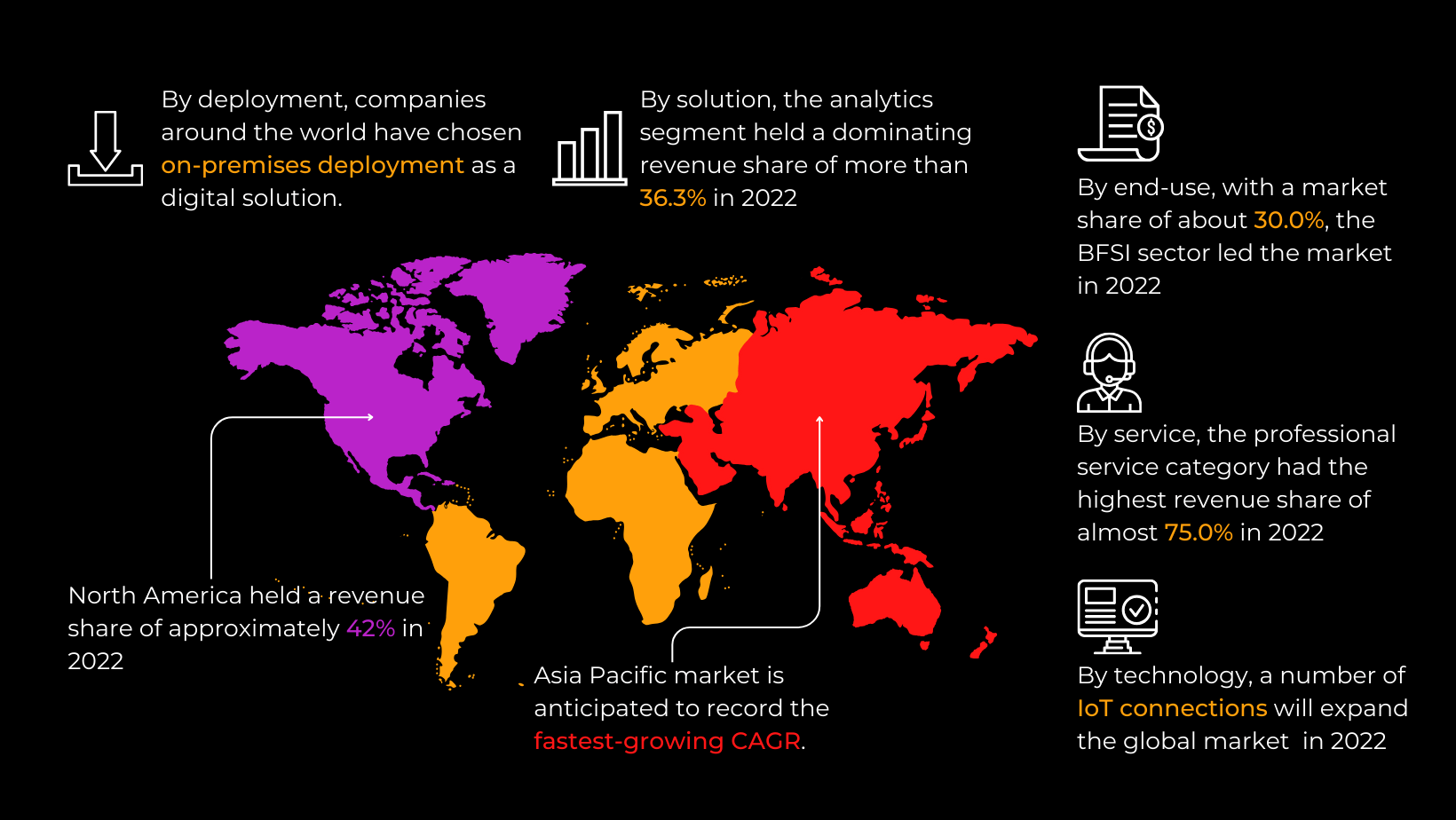
Data Engineering and Analytics
Above all data engineering and analytics stand as pillars of informed decision-making. Beyond the conventional wisdom that data is a valuable asset, there are profound, albeit discreet, developments that drive their demand.
Data Engineering
Data engineering, the core of data-driven decision-making, involves:
- collecting,
- cleaning,
- and shaping
raw data into a format that can be readily analyzed. This process, often overshadowed by its analytical counterpart, is a pivotal precursor to any meaningful insights.
Consider this intriguing fact: A study by IBM reveals that poor data quality costs the U.S. economy around $3.1 trillion annually. While data engineering becomes the guardian of quality data by ensuring accuracy and reliability, thereby helping businesses avoid this staggering economic drain.
Data Analytics
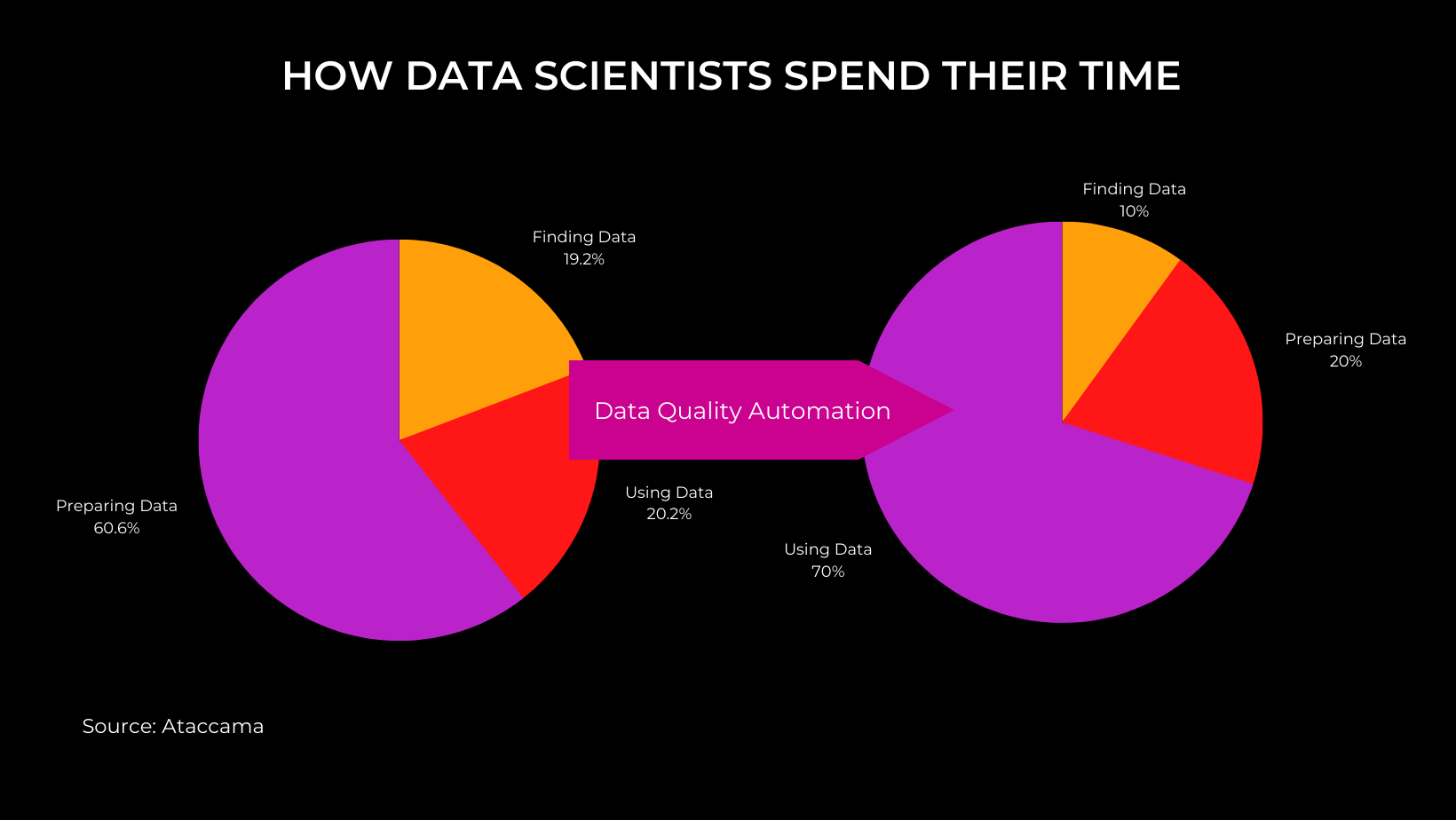
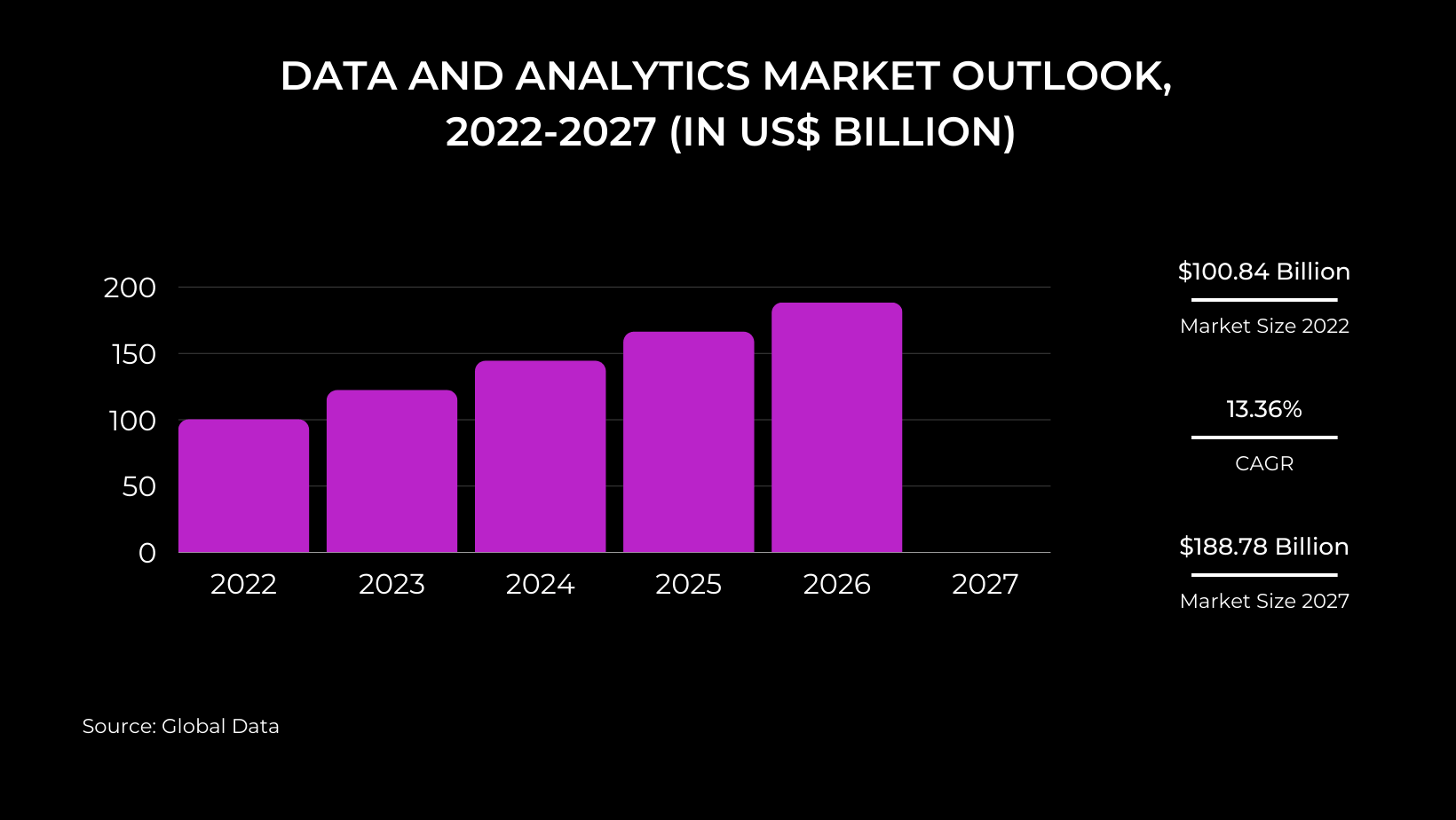
Data analytics, the sophisticated art of extracting meaning from data, is, in its own right, a driving force. Consequently the global data and analytics market was valued at US$ 100.84 billion in 2022 and will grow at a compounded annual growth rate (CAGR) of 13.36% to reach a value of US$ 188.78 billion by 2027, according to Global Data. This industry’s rapid growth underscores its increasingly crucial role in steering businesses toward profitable decisions.
However, what distinguishes this section from cliches is not merely the importance of data analytics but the subtle shift in the nuances of its application. While traditionally seen as a tool for insights, it has quietly evolved into a potent instrument for proactively identifying trends, exploring predictive analytics, and enabling businesses to stay ahead of the curve.
In this era of discreet innovation, data engineering and analytics are not just buzzwords; they are the underappreciated bedrock of organizations’ successes. They are the dynamic duo of data, shaping and refining information, and deciphering its intricacies, thereby empowering businesses to harness the true potential of their most valuable resource.
DevOps Consulting and Implementation
DevOps consulting and implementation are quietly orchestrating a revolution in software delivery. Beyond the familiar buzzwords, their impact on organizations is profound and often obscured. What are some other in-demand IT services?
DevOps as a Necessity
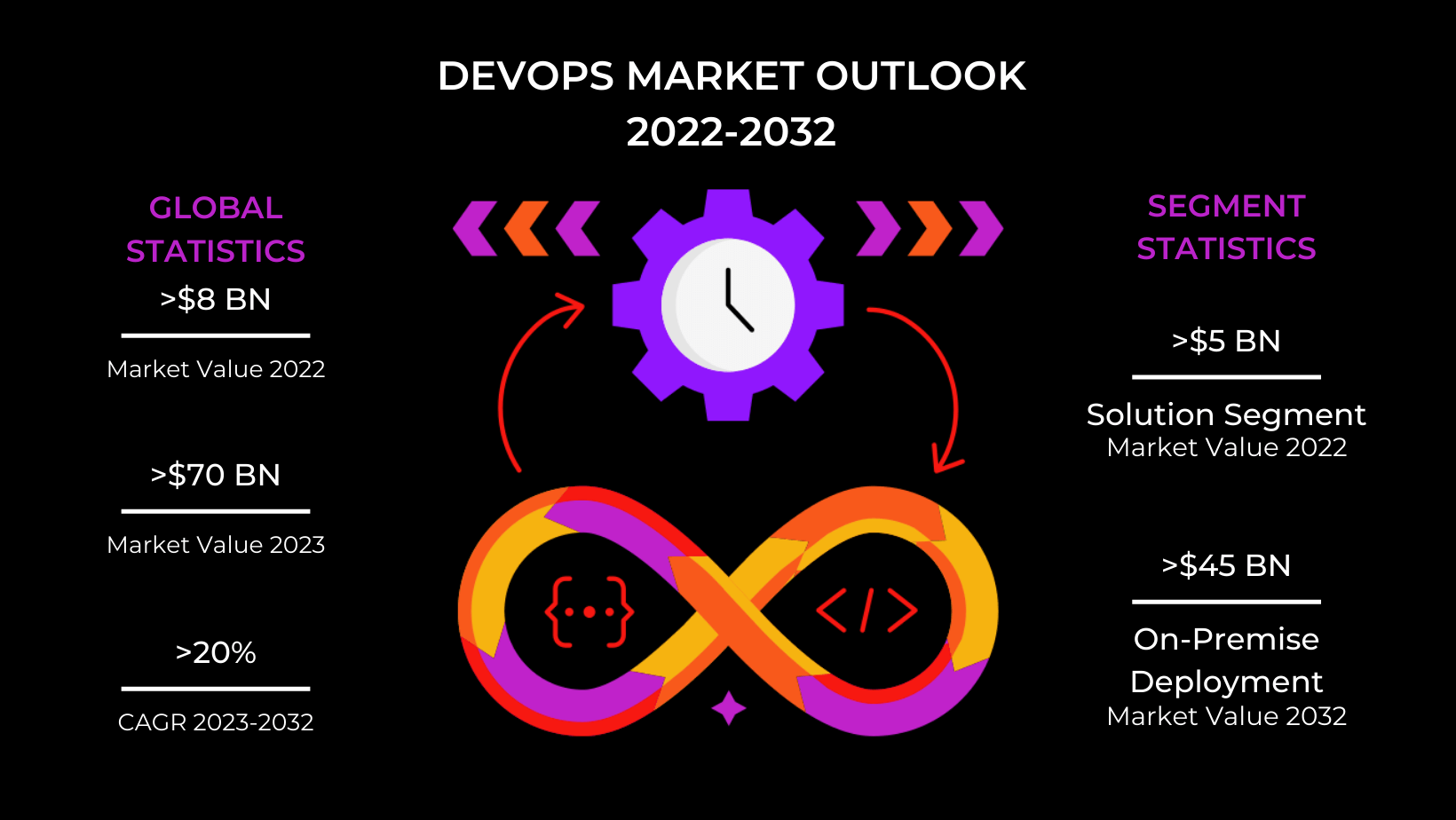
As of 2022, according to a report by Imarc Group, The global DevOps market size reached US$ 8.7 Billion in 2022. Looking forward, IMARC Group expects the market to reach US$ 32.7 Billion by 2028, exhibiting a growth rate (CAGR) of 24.5% during 2023-2028. This staggering growth signifies that DevOps is not merely a trend but an indispensable asset for businesses.
Gone are the days when software development and IT operations were separate silos. DevOps is the unsung hero bridging the gap, ensuring that software is developed, tested, and deployed seamlessly. It’s more than just a methodology; it’s a cultural shift within organizations that fosters collaboration and automation.
DevOps for Faster, Quality Deliveries
Additionally, customer expectations for rapid software updates are soaring, so DevOps shines as an enabler at the moment. The conventional approach to software development, often plagued by long release cycles and manual processes, pales in comparison to DevOps-driven systems.
What distinguishes this revolution is not just the need for DevOps but its evolving role. Beyond accelerating software delivery, DevOps has expanded its influence to areas like security, compliance, and even finance, making it a comprehensive solution to the multifaceted challenges businesses face.
Robotic Process Automation
Robotic Process Automation (RPA) operates as a subtle powerhouse of efficiency, altering the very fabric of business operations in the intricate ecosystem of IT services. Here are some more in-demand IT services listed.
The Unveiling of RPA’s Impact
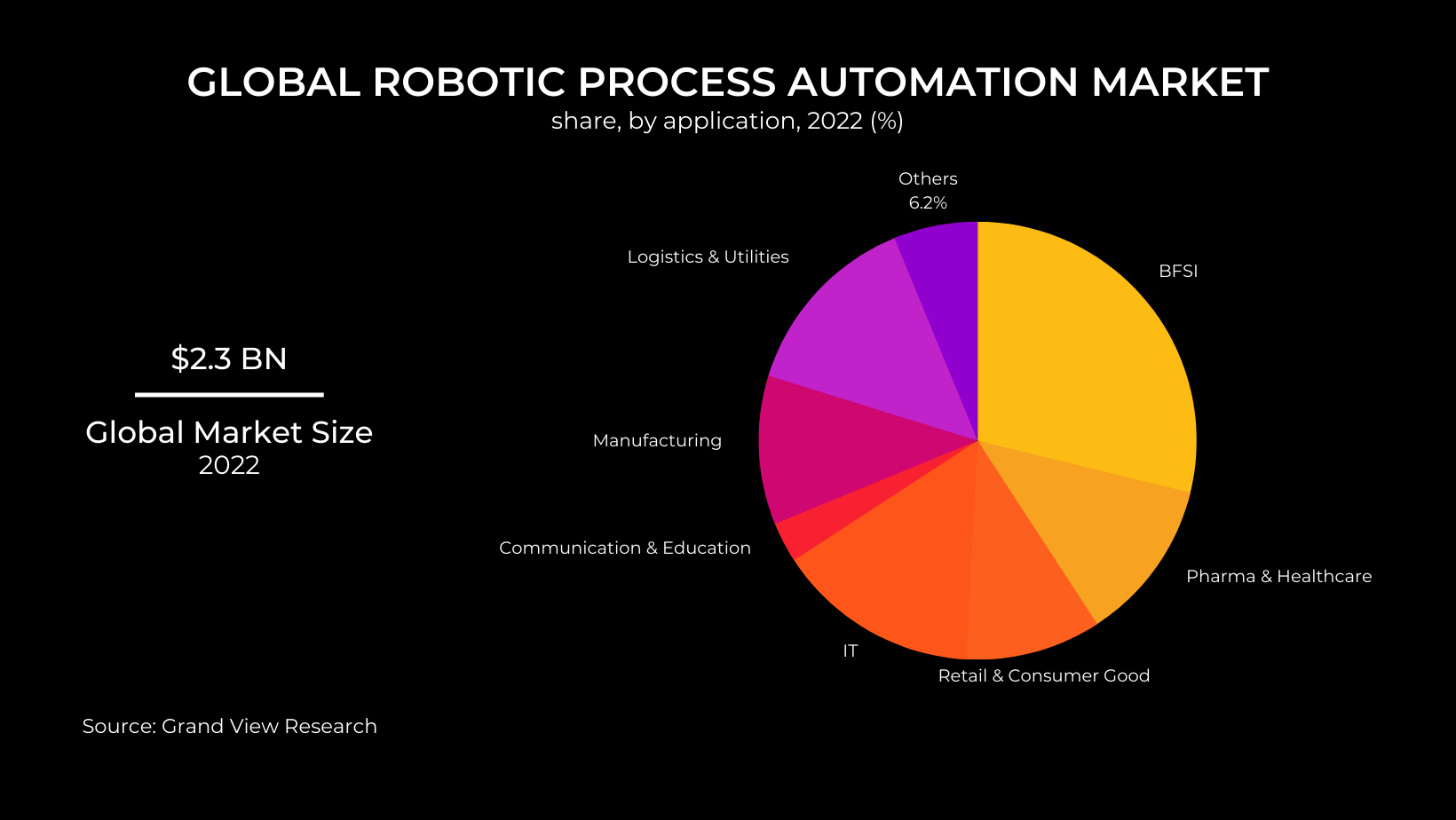
The global robotic process automation market size was valued at USD 2.3 billion in 2022 and is projected to expand at a CAGR of 39.9% from 2023 to 2030, according to Grand View Research. These figures are basically a testament to RPA’s rising importance, and they underscore its transformation from a technology of the future to an imperative of the present.
Besides RPA is not only about automating repetitive tasks but reimagining business processes. It’s about efficiency, accuracy, and the liberation of human resources from mundane, rule-based work. These changes are less apparent but highly significant in reshaping how businesses operate.
RPA Beyond the Mundane
What sets this apart from cliches is the acknowledgment of RPA’s ever-expanding scope. It is not confined to a single industry or repetitive tasks alone. RPA is making inroads into complex data handling, customer interactions, and decision support, becoming a versatile tool in businesses’ quest for excellence.
Its influence isn’t confined to cost savings and process automation. RPA is a catalyst for agility, adaptability, and heightened customer service. It’s reshaping industries quietly but dramatically, helping organizations thrive in a world where efficiency is not just an advantage but an expectation. RPA is a silent partner in the digital transformation journey, driving success behind the scenes.
AI-Powered Chatbots and Virtual Assistants
The unassuming powerhouses of AI-powered chatbots and virtual assistants have been revolutionizing customer engagement, albeit in a manner that often eludes the spotlight.
The Discreet Transformation
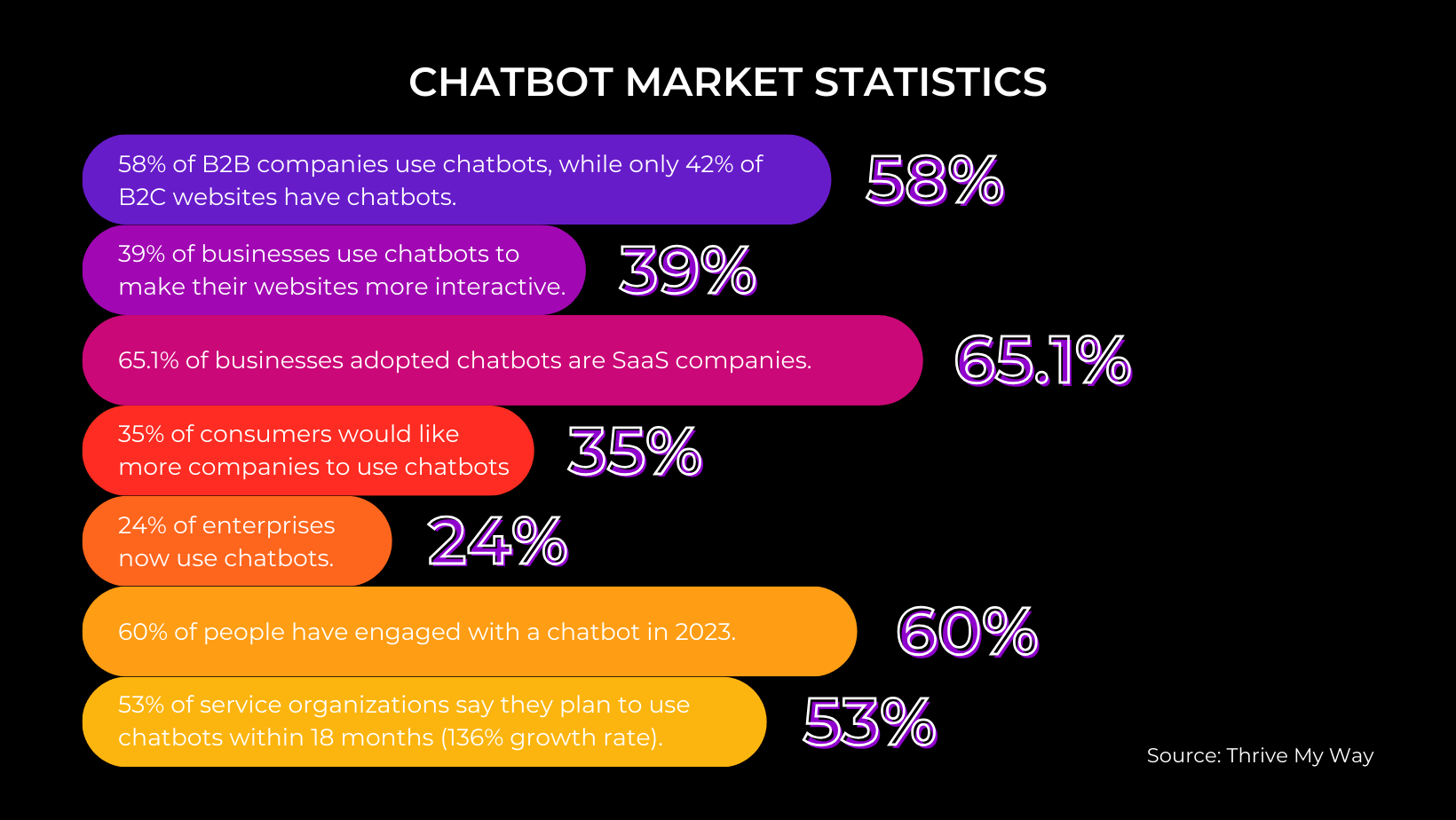
Basically, the global chatbot market size was valued at around USD 4.92 billion in 2022 and is projected to surpass USD 42 billion by 2032, it is growing at a compound annual growth rate (CAGR) of 23.91% from 2023 and 2032. This unassuming market figure underscores a significant shift in how businesses engage with their customers. The rise of AI-powered chatbots and virtual assistants isn’t a mere trend; it’s an ongoing revolution in customer service.
Beyond automating responses and streamlining user experiences, these chatbots have evolved into personalized, AI-driven customer support systems that operate 24/7. They go beyond cliched responses, offering tailored interactions that make customers feel genuinely heard and attended to.
AI’s Quiet Influence
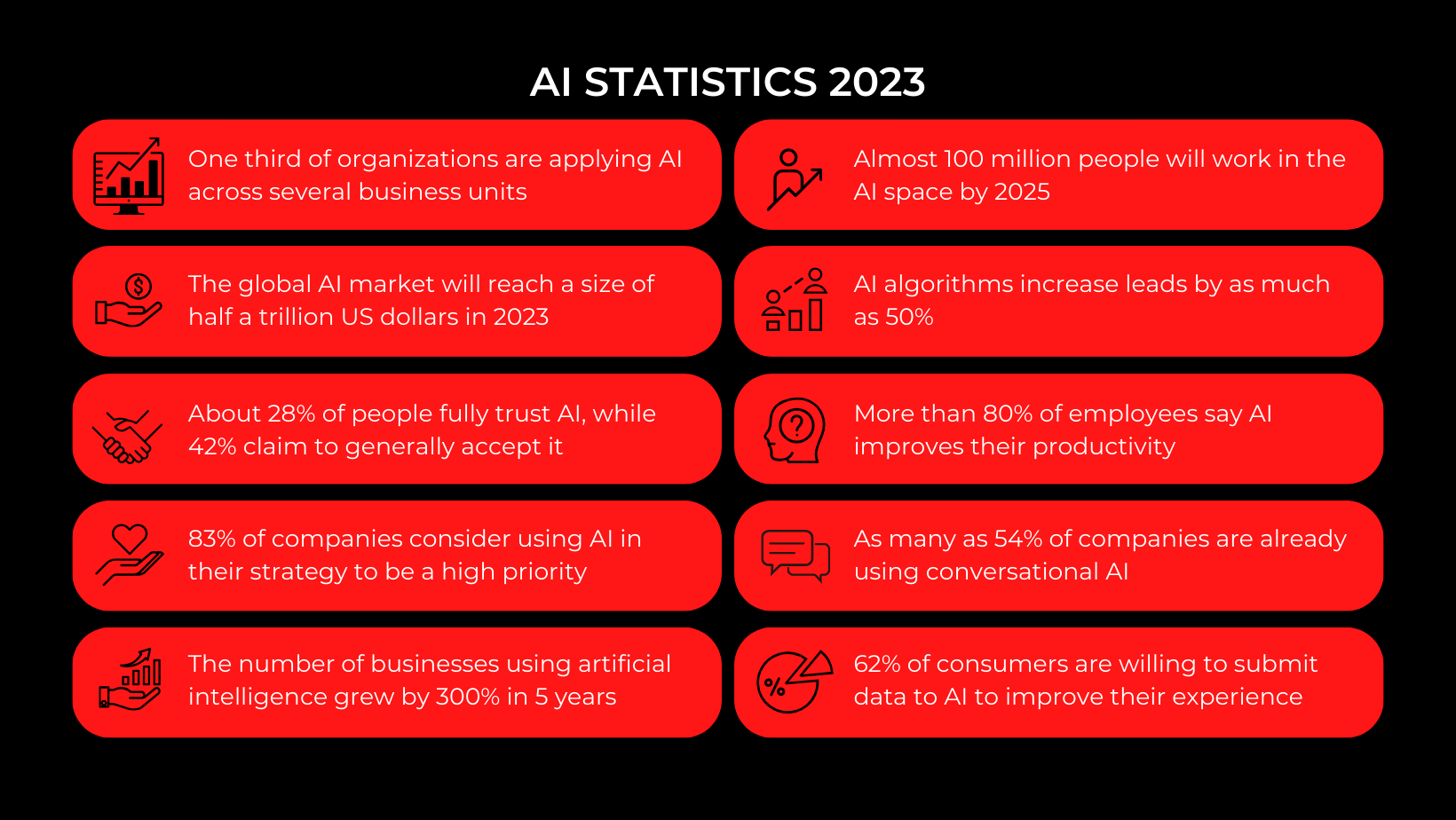
Certainly, the uniqueness of this transformation lies in the subtlety of AI’s influence. While it might not be glaringly apparent, AI is slowly but profoundly changing the dynamics of customer service, allowing companies to operate efficiently while providing exceptional user experiences.
Moreover, AI-powered chatbots and virtual assistants are not confined to the realm of customer service alone. They’re making inroads into knowledge management, sales, and even healthcare, enabling a multifaceted impact on various sectors. They’re the silent revolutionaries, ensuring businesses stay ahead by offering personalized assistance and support, thereby strengthening customer loyalty and streamlining operations. These AI-driven systems are not just tools; they are strategic assets, quietly driving innovation in the IT services industry.
Here you can read our blog to find out if every business needs AI in 2023?
Edge Computing Solutions
Edge computing solutions are quietly challenging the norms, redefining the boundaries of real-time data processing.
The Unseen Revolution
In a data-driven era, where every millisecond counts, edge computing emerges as a game-changer. A report by Market Us reveals that the global edge computing market was valued at USD 40 million in 2022 and will surpass around USD 206 billion by 2032, it is poised to reach a CAGR of 18.3% from 2023 to 2032, showcasing the undeniable significance of this technology.
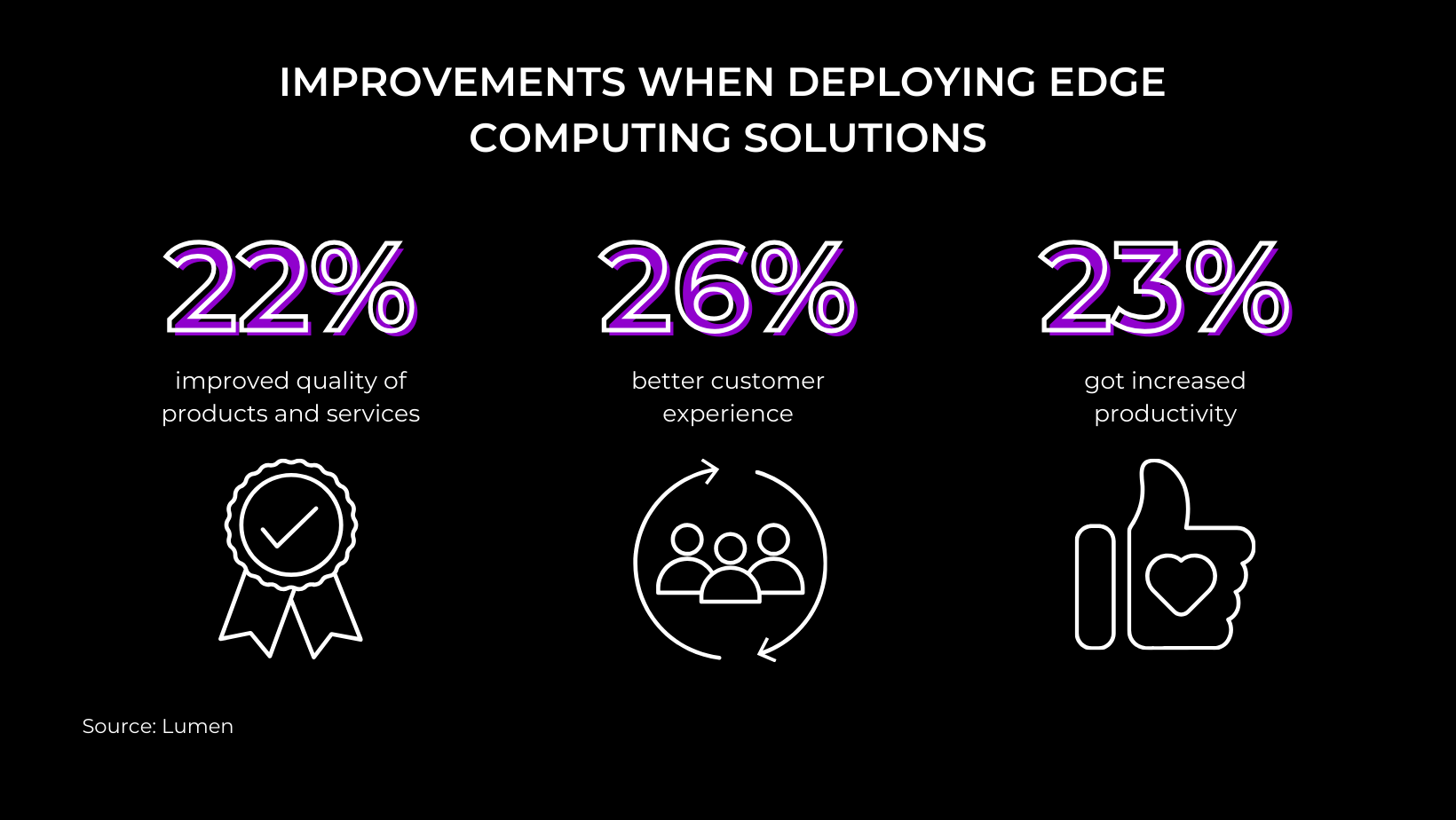
So, this isn’t merely about data processing at the edge; it’s about a fundamental shift in the way data is handled. Edge computing stands as a unique departure from the cliches, taking data processing and analysis closer to the data source, resulting in reduced latency and faster decision-making.
Beyond the Buzzwords
Besides edge computing’s distinctiveness lies in its multifaceted applications that extend far beyond industry buzzwords. While it does play a crucial role in enabling real-time processing for IoT devices, it also revolutionizes content delivery, video analytics, and even autonomous vehicles.
Blockchain for Supply Chain and Beyond
Blockchain for supply chain management stands as an uncelebrated agent of change, rewriting the rules of transparency and security.
The Unrecognized Shift
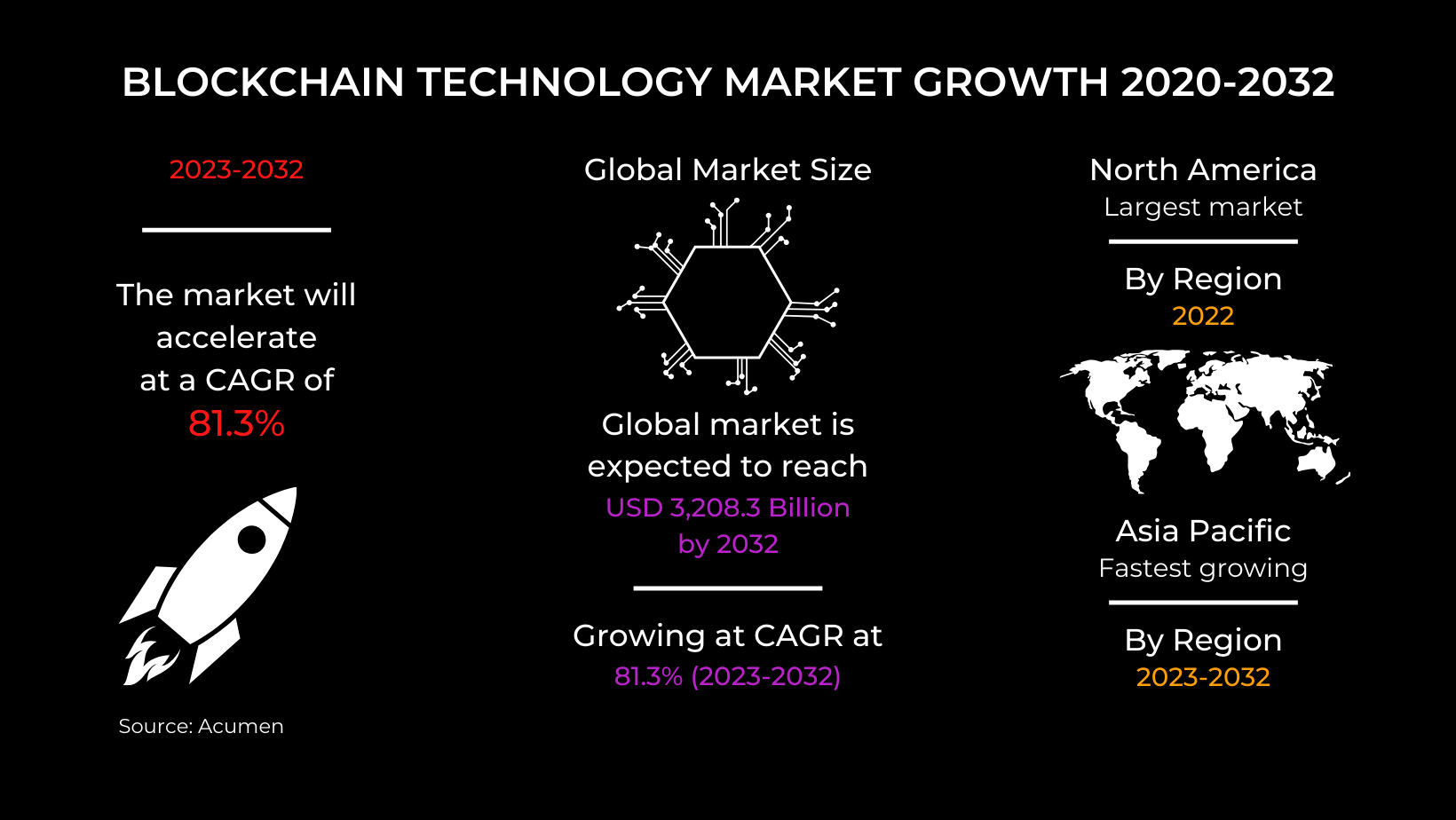
According to Acumen Research & Consulting, the blockchain technology market was worth USD 9.1 billion in 2022 and is expected to reach USD 3,203.8 billion by 2032, growing at 81.3% CAGR from 2023 to 2032. However, the most intriguing facet of this growth is not its size but the subtle transformation it heralds across various industries, particularly in supply chain management.
Blockchain’s role also extends into reshaping how supply chains operate. Beyond the cliches, blockchain introduces an innovative way to track and verify the journey of products from manufacturer to end consumer. Its distributed ledger technology ensures an unforgeable record, ultimately building trust within the supply chain.
Blockchain’s Multifaceted Impact
What truly distinguishes this transformation is the extensive reach of blockchain’s influence. It doesn’t merely enable traceability in supply chains; it also revolutionizes logistics, quality control, and compliance management.
Businesses now leverage blockchain to ensure authenticity, reduce fraud, and expedite dispute resolution. It’s a dynamic shift, that safeguards the integrity of products while streamlining operations and reducing costs.
Furthermore, blockchain’s potential transcends the conventional, expanding into applications like:
- voting systems,
- healthcare records,
- and intellectual property rights protection.
It also stands as an instrument of comprehensive transformation, quietly remolding how businesses operate.
Conclusion
As we eventually conclude, it’s crucial to recognize subtle yet profound changes defining the future of technology.
So, data engineering and analytics lay the foundation for sound decision-making. DevOps, despite not grabbing headlines, is indispensable for efficiency and agility. Robotic Process Automation (RPA) drives efficiency beyond routine automation. AI-powered chatbots subtly redefine customer engagement. Edge computing challenges latency norms, enabling real-time decision-making. Blockchain’s influence extends from supply chains to healthcare, revolutionizing transparency, trust, and security.
Evidently these transformations collectively impact businesses, acting as a symphony that drives innovation and empowers organizations to thrive. These are the most in-demand IT services.