WHAT WILL BE THE TOP IT TOOLS AND TECHNOLOGIES 2024?
Introduction
Certainly, the future runs on IT changes. As we get ready for 2024, IT services are going to change a lot, thanks to new and super cool tools and technology. So, if you love tech and like to think ahead, you should really pay attention to this. Let’s see what will be the top tools and technologies used in IT services in 2024?
Why, you’d ask?
Because, in 2024, IT services will be more indispensable than ever. A startling 94% of organizations surveyed in a recent global IT trends report are projected to increase their IT budgets, reinforcing the pivotal role of technology in our connected world. Consequently, by 2024, IT spending is expected to increase to a staggering 5.13 trillion dollars worldwide, according to Statista. But it’s not just about the investments; it’s about where these investments are headed.
So, picture this: By 2024, a jaw-dropping 90% of businesses are expected to adopt some form of automation. The fourth industrial revolution is upon us, and it’s taking the shape of hyper automation, where artificial intelligence, machine learning, and robotic process automation come together in symphony to drive innovation and efficiency. A recent survey by Gartner, Inc. found that 80% of executives think automation can be applied to any business decision.
In simple terms, this blog is like your guidebook for understanding the changing world of IT in 2024. We’re going to explore cool tools and tech that will make a big difference in how we do things. Come with us on this journey to see how things like hyper automation, blockchain, cybersecurity, and edge computing are creating a new way of doing IT services.

Hyper Automation: A Paradigm Shift
Above all, hyper automation is not just a buzzword; it’s a profound transformation in the IT landscape. According to Gartner, by 2024, organizations will lower operational costs by 30% through combining hyper automation with other advanced technologies.
Case Study
Hyper Automation in Medical and Healthcare
A study about the healthcare system in the United States found that they spend a lot of money, around 2.1 billion dollars each year, on doing tasks by hand that often have mistakes. This might be the case in other countries too. If we can make these tasks smoother and more efficient, it leaves more time for doctors and nurses to take better care of patients.
Certainly, some hospitals are using digital nurse avatars to talk to patients first. These digital nurses ask important questions about a person’s health and symptoms to help with diagnosis and guide them to the right medical centers.
Automation can make billing easier by looking at bills from different departments and putting them together without people having to do it. On the other hand, this speeds up the process of making and paying bills. Smart automation that uses AI (artificial intelligence) and RPA (robotic process automation) can also help with insurance and claims in hospitals. Likewise, AI can understand insurance policies and a robot can send bills with all the right documents.
If you want to learn more about how IT services can help healthcare organizations, check out our blog.
The Convergence of Technologies
But hyper automation isn’t just one thing; it’s a mix of different technologies. Things like AI, machine learning, and RPA are part of it. However ,the RPA market is expected to grow to $2.3 billion by 2024, showing it’s getting bigger fast. When these technologies come together, businesses can do hard tasks automatically. This means they can make decisions faster and make fewer mistakes.
Predicting the Future of Hyper Automation
To sum up, the future of hyper automation looks really promising. Clearly, experts say that by 2025, we’ll see more AI-powered operations, from just 5% to a big 30%. Similarly, this means that artificial intelligence will be a huge part of hyperautomation. In conclusion, machines will get better at learning and making changes as they go, like getting smarter in real-time. Subsequently, this could lead to “lights-out” operations where things happen automatically without people needing to do them.

Blockchain and Cybersecurity: A Match Made in the Digital Age
Blockchain technology, often associated with cryptocurrencies, is now at the forefront of fortifying cybersecurity. For example, a recent U.S. Small Business Association poll revealed that 88% of small business owners believe their operations are vulnerable to cyber assault. Almost all of these organizations believe that blockchain enhances their security posture. This widespread trust in blockchain’s security capabilities showcases its growing significance in the realm of cybersecurity.
Case Study
IBM
So, one example of a famous company that has benefited from applying blockchain technology and cybersecurity is IBM. IBM has been at the forefront of blockchain adoption, and they have incorporated blockchain into various aspects of their business, including supply chain management and cybersecurity.
IBM Food Trust
This platform, for instance, utilizes blockchain technology to enhance the transparency and traceability of the food supply chain. It has been used by several major companies, including Walmart and Nestle. According to IBM, the use of blockchain in the food supply chain can reduce the time it takes to trace the source of contaminated food from weeks to seconds, potentially saving lives and reducing the economic impact of food recalls.
World Wire
IBM’s World Wire is a blockchain-based cross-border payment network that aims to improve the efficiency and security of international payments. By using the Stellar blockchain, World Wire enables faster and more cost-effective cross-border transactions. This technology has the potential to disrupt the traditional banking and remittance industries, making international transactions quicker and cheaper.
Cybersecurity
IBM has invested heavily in cybersecurity and offers services and solutions to help companies protect their digital assets. They use blockchain for security purposes, including identity verification, secure access control, and protecting sensitive data. The use of blockchain in cybersecurity can provide immutable records of security events and make it more challenging for cybercriminals to manipulate data.
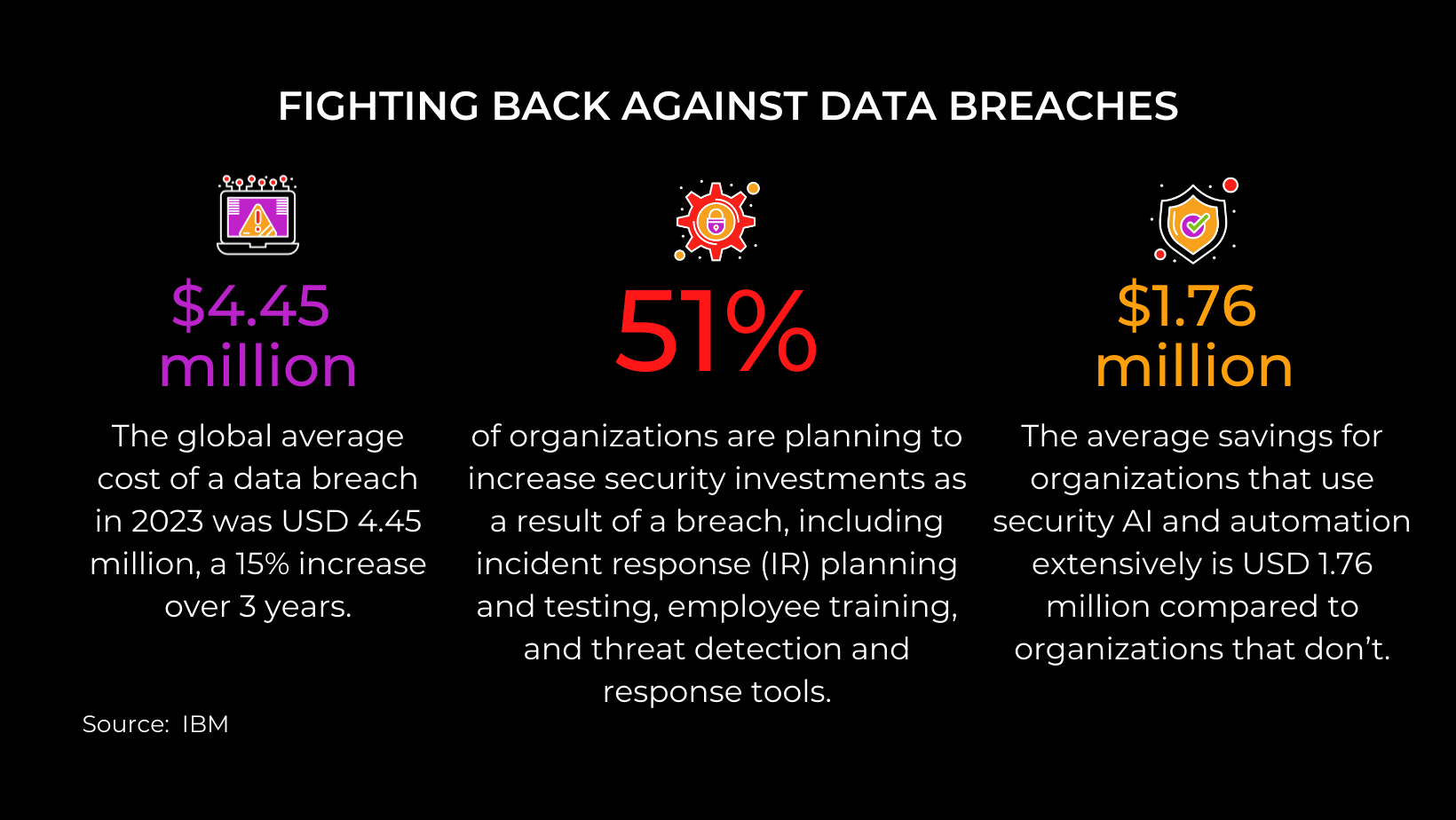
Emerging Technologies in Cybersecurity
The cybersecurity landscape is evolving to combat increasingly sophisticated threats. One notable example is quantum-safe encryption. With the advent of quantum computing, classical encryption methods could become vulnerable. As a result, organizations are investing heavily in quantum-safe encryption to ensure data remains secure.

Predicting the Future of Blockchain and Cybersecurity
To sum up, looking ahead, blockchain’s role in cybersecurity will only grow. The ‘World Economic Forum’ anticipates that 10% of global GDP will be stored on the blockchain by 2025. for digital identity verification. This marks a significant shift in how personal information is safeguarded, reducing the risk of identity theft and fraud.
Moreover, blockchain’s integration with IoT (Internet of Things) devices will create a secure ecosystem for interconnected devices. In conclusion, with a projected 21 billion IoT devices in use by 2025, this collaboration has immense potential to prevent data breaches and ensure the reliability of IoT applications.
Edge Computing: Unleashing the Power of Proximity
Edge computing, the vanguard of the new era, is revolutionizing the data is processing and delivering of applications. In this chapter, we’ll explore the fascinating world of edge computing and future trends that herald a seismic shift in the IT landscape.
Understanding the Edge Computing Revolution
Edge computing is not just a niche concept; it’s a transformation that’s altering the rules of data processing. The market is reflective of this change, experts project that the global spending on edge computing will reach $250 billion by 2024, according to Markets and Markets. This staggering investment underscores the enormous potential and growing relevance of edge computing.
Case Study
Tesla, Inc.
One of the famous companies that has benefited from applying edge computing is Tesla, Inc., the electric vehicle (EV) and clean energy company. Tesla has integrated edge computing into its vehicles to enhance their performance, safety, and autonomy.
Autopilot and Full Self-Driving (FSD) Capabilities
These cool features use sensors, cameras, and radar systems to get information from around the car. The car then quickly thinks about this information (at the edge) to do things like staying in the right lane, keeping a safe distance from other cars, and handling tricky traffic situations.
Over-the-Air (OTA) Updates
You’ve probably heard about how Tesla can send updates to its cars without needing to bring them to a repair shop. These updates make the car work better, add new features, and make it safer. Tesla’s cars have built-in technology (edge computing) that lets these updates happen easily, so you don’t have to visit a service center.
Safety Improvements
Tesla uses edge computing to make its advanced safety features work. This includes things like the car automatically braking to avoid a crash. Because the car processes information quickly right inside the vehicle, it can react faster, which helps stop accidents and keeps everyone on the road safer.
Collecting and Learning from Data
Tesla collects a lot of data from its cars to make its self-driving technology better. They take this data and analyze it right in the car, which is called edge processing. This helps Tesla keep improving how their cars drive themselves.
A Network of Smart Cars
Tesla’s approach is to use all its cars (over a million of them) as a kind of network. Each car helps collect and process data. This big network of smart cars helps Tesla learn from real-world experiences and make their cars even smarter.
Key Technologies in Edge Computing
Edge computing relies on three main things: IoT devices, microservices architecture, and 5G technology. Also, when 5G networks become more widespread, edge computing will become even more important because it can provide super-fast and responsive connections. This will be a big deal for things like self-driving cars and smart cities.
 Predicting the Future of Edge Computing
Consequently, the future of edge computing looks very promising. By 2025, it’s expected that more than 75% of the data generated by businesses will be processed using edge computing, according to experts at Gartner. This means that edge computing will become essential for handling real-time data and fast applications.
Additionally, edge computing will play a crucial role in making the metaverse a reality. In short, the metaverse is like a virtual world where you can have immersive experiences. So, edge computing will provide the computing power needed for these experiences. So, the metaverse is not just an idea; it’s something edge computing will make possible.
Conclusion
Most importantly, as we look ahead to IT services in 2024, we’ve seen how important hyperautomation, blockchain in cybersecurity, and edge computing are. Further, these aren’t just ideas; they’re real technologies making a big difference, as we’ve seen from practical examples.
Moreover , the future has even more exciting things in store. And we’ll see self-operating technology, better online security with blockchain, and a new virtual world called the metaverse.
To sum up: todo well in this changing tech world, we need to adapt. So, the tools we’ve explored help us stay competitive, work more efficiently, and stay safe in the digital world. Additionally, as we wrap up our journey, remember that technology is most valuable when it makes our lives and businesses better. So, be open to learning, stay flexible, and embrace the endless possibilities the future brings.